
Russian missile and drone attacks disrupted power supplies across Ukraine, forced the Zaporizhzhia Nuclear Power Plant to rely on backup generators and caused civilian casualties. Meanwhile, Kyiv prepared for new peace negotiations, faced growing pressure over corruption allegations and worked to evacuate children from frontline communities
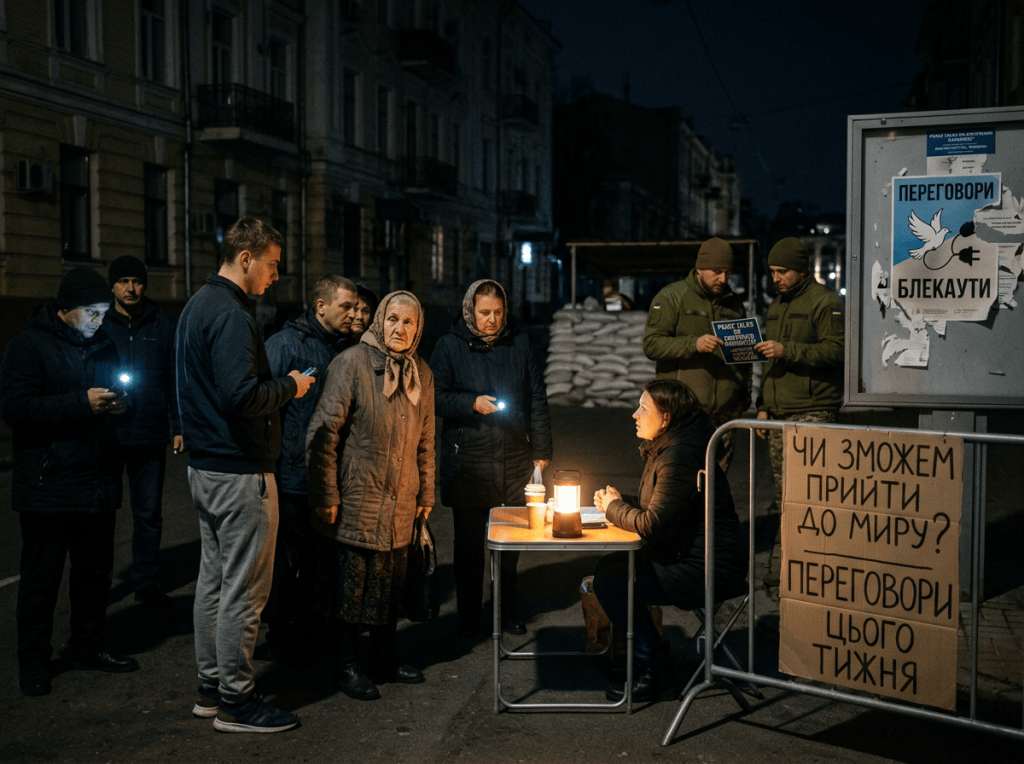
Ukraine experienced another difficult weekend on November 7–8, as Russian attacks targeted Kyiv and several other regions, causing civilian casualties and extensive damage to energy infrastructure. The strikes also affected transport links in the capital and renewed concerns about the safety of the Russian-occupied Zaporizhzhia Nuclear Power Plant. Meanwhile, diplomatic preparations continued for a new round of negotiations in Abu Dhabi. Ukrainian authorities also announced further personnel changes in the Security Service of Ukraine following a major corruption investigation, informed Foreign Ukraine.
Russian ballistic missiles and drones strike Kyiv
Russia launched a large-scale missile and drone attack on Kyiv and the surrounding region overnight on November 6–7.
According to President Volodymyr Zelenskyy, Russian forces fired 36 ballistic missiles, directing all of them towards Kyiv and the Kyiv region. Ukraine’s air defences intercepted only four of the missiles.
The attack severely damaged energy infrastructure, residential buildings and commercial facilities. The Northern Bridge across the Dnipro River was also hit, disrupting transport in the capital.
At least one person was killed and eight others, including a child, were injured in the Kyiv region, according to regional authorities. Other casualties were reported elsewhere in Ukraine.
The strikes caused serious disruptions to electricity, heating and water supplies in Kyiv, where temperatures were approaching freezing. Mayor Vitali Klitschko described the situation as extremely difficult.
Russia said it had targeted military-industrial, energy and transport infrastructure. However, its claims about the military nature of the targets have not been independently verified.
Reuters reported that the attacks damaged energy facilities supplying electricity from two Ukrainian nuclear power plants, adding to the pressure on the country’s already strained power system.
Hundreds of thousands of Ukrainians affected by power outages
Russian attacks on November 7–8 continued to disrupt electricity supplies across Ukraine.
The Dnipropetrovsk region experienced particularly serious consequences. According to President Zelenskyy, more than 600,000 electricity consumers were without power at the peak of the outages. The affected consumers included households, businesses and critical infrastructure facilities.
Energy workers began restoring supplies, but the damage highlighted the vulnerability of Ukraine’s electricity network as winter approaches.
Other regions, including Kharkiv and Zhytomyr, also experienced disruptions following Russian attacks on energy facilities.
Ukraine has repeatedly called on its international partners to provide additional air defence systems and interceptor missiles to protect power plants, substations and other critical infrastructure.
The latest attacks have intensified concerns about whether Ukraine can maintain stable electricity and heating supplies throughout the winter.
Zaporizhzhia Nuclear Power Plant temporarily loses external electricity
The Russian-occupied Zaporizhzhia Nuclear Power Plant temporarily lost its external electricity supply on November 8, raising fresh concerns about nuclear safety.
The facility disconnected from the Ukrainian power grid after the Ferosplavna external power line went offline. The plant switched to backup diesel generators to maintain the systems needed for reactor cooling and other essential safety functions.
The International Atomic Energy Agency (IAEA) later confirmed that external power had been restored.
According to Reuters, this was the plant’s 27th loss of external electricity since Russia launched its full-scale invasion in February 2022.
Although the six-reactor facility is no longer generating electricity, it still requires a stable external power supply to maintain essential safety systems and keep nuclear fuel cool.
The repeated interruptions underline the risks associated with Russia’s occupation of Europe’s largest nuclear power plant.
Russian attacks kill and injure civilians in several regions
Russian attacks continued to affect civilian communities across Ukraine during the weekend.
In the Dnipropetrovsk region, Russian strikes caused casualties and damaged infrastructure. The region also suffered extensive power outages, with more than 600,000 consumers temporarily left without electricity.
Odesa and other regions also reported attacks on civilian and infrastructure facilities. Russian strikes continued to threaten residential areas, businesses and essential services.
One particularly alarming development was a Russian drone attack on emergency workers in Komyshuvakha, Zaporizhzhia region, on November 8.
The rescuers were working at the site of an earlier Russian airstrike that had destroyed a former school and an underground shelter where residents had gathered to receive humanitarian assistance. The drone damaged rescue equipment, but no additional injuries were reported in Sunday’s attack.
Three people, including a child, die from carbon monoxide poisoning
Ukraine’s energy crisis also produced a tragic incident unrelated to direct Russian fire.
On November 8, three people, including a child, died from carbon monoxide poisoning in the village of Chupyra in Kyiv region after a generator was operated in the basement of a residential building.
According to Ukraine’s State Emergency Service, the generator had been placed indoors instead of outside at a safe distance from the building. Another child was hospitalized.
The incident highlighted the dangers associated with the widespread use of portable generators during prolonged electricity outages. As millions of Ukrainians increasingly rely on alternative power sources, authorities have warned residents not to operate generators inside homes, basements or garages.
Carbon monoxide is colourless and odourless, making poisoning particularly dangerous when generators are used in enclosed or poorly ventilated spaces.
Zelenskyy asks Prime Minister Serhii Koretsky to prepare free public transport in Kyiv
The damage to Kyiv’s energy and transport infrastructure prompted the government to consider additional measures to help residents move around the capital.
On November 8, President Zelenskyy instructed Prime Minister Serhii Koretsky to prepare a programme providing free travel on Kyiv’s surface public transport.
The government was also asked to ensure an adequate reserve of buses and develop alternative transport arrangements in case of disruptions to metro services or further restrictions on bridges across the Dnipro River.
Zelenskyy said the government, the National Security and Defence Council and the Interior Ministry had discussed possible reserve transport routes for the capital.
The initiative was intended to help maintain access to public transport during infrastructure disruptions. At the time of the announcement, the programme’s precise implementation details, timetable and funding arrangements had not yet been made public.
Zelenskyy announces further personnel changes following corruption investigation
A major corruption investigation involving alleged links between criminal groups and law enforcement officials continued to dominate Ukraine’s domestic political agenda.
The case, known as Operation Carthage, was launched by the National Anti-Corruption Bureau of Ukraine (NABU) and the Specialized Anti-Corruption Prosecutor’s Office (SAPO).
Investigators allege that members of a criminal organisation regularly paid illegal benefits to senior law enforcement officials in exchange for protection of fraudulent call centres and other illegal businesses.
The investigation involves alleged links to officials from the Security Service of Ukraine (SBU), the National Police and the Prosecutor General’s Office.
On November 7, President Zelenskyy announced that further personnel changes would be made within the Security Service following the revelations. He described the alleged abuses as unacceptable and said that officials had already been dismissed.
The president also called for a thorough investigation and accountability for those responsible.
The case has renewed scrutiny of Ukraine’s law enforcement institutions at a time when the country is seeking closer integration with the European Union and must demonstrate progress in tackling corruption.
The allegations remain subject to investigation and judicial proceedings.
European representatives to join Ukraine peace talks in Abu Dhabi
Diplomatic preparations continued for a new round of negotiations involving Ukraine, Russia and the United States, scheduled for November 10–11 in Abu Dhabi.
On November 8, French Foreign Minister Jean-Noël Barrot confirmed that European representatives would participate in the talks. He said France would also be represented, although the identity of its representative had not yet been announced.
The discussions were expected to focus on possible steps towards ending Russia’s war against Ukraine, post-war security arrangements and de-escalation measures.
Ukraine has repeatedly insisted that any settlement must include credible security guarantees and cannot be based on surrendering Ukrainian territory.
The participation of European countries is significant because Kyiv has argued that European security interests must be taken into account in any agreement concerning the future of Ukraine.
However, the prospects for a breakthrough remained uncertain, given the substantial differences between Moscow’s demands and Kyiv’s position.
Ukrainian forces strike military and logistics targets inside Russia
Ukraine continued attacks on Russian military infrastructure during the weekend.
On November 7, Ukraine’s General Staff reported that Ukrainian missile forces had struck the Proton-Electrotex military-industrial facility in the Russian city of Oryol using Neptune coastal missile systems.
According to the Ukrainian military, the facility manufactures electronic and optoelectronic components used in Russian weapons systems, including components associated with cruise and ballistic missiles. A fire was reported at the site, while the extent of the damage was still being assessed.
Ukrainian forces also reported strikes against two Iskander missile launchers and a Pantsir-S1 air defence system in Russia’s Bryansk region.
On November 8, Ukrainian drone strikes damaged a bridge over the Mius River in Russia’s Rostov region, according to regional Governor Yuri Slyusar.
The bridge is located on the R-280 highway, a strategic transport route connecting southern Russia with Russian-occupied Ukrainian territories, including Crimea.
The reported damage forced authorities to close traffic on the road. A Ukrainian strike also damaged a transformer at a power substation in the region, causing electricity outages in several villages.
The Kyiv Independent noted that it could not independently verify some details of the reported bridge attack.
Heavy fighting continues along the front line
Intense fighting continued across eastern and southern Ukraine.
According to the General Staff of the Ukrainian Armed Forces, 199 combat engagements were recorded along the front line during the 24 hours preceding the morning of November 8.
Russian forces launched missile and air attacks, used thousands of attack drones and continued shelling Ukrainian positions and settlements.
The Kostiantynivka sector remained among the areas experiencing particularly intense fighting. On November 8, the Pokrovsk sector was also among the main areas of Russian activity.
A later operational update from the General Staff reported 127 combat engagements by 10 p.m. on November 8. These figures refer to different reporting periods and should not be treated as directly comparable daily totals.
Ukraine calls for a boycott of international hockey matches against Russia
Ukraine continued its campaign against Russia’s return to international sport.
The Ukrainian Foreign Ministry and Ministry of Youth and Sports issued a joint statement on November 6 calling on other countries to boycott matches against Russian national ice hockey teams.
The statement followed a series of international discussions about the participation of Russian teams in competitions, including the 2027 IIHF World Junior Championship.
Ukraine welcomed the positions of countries that had announced they would refuse to play against Russian national teams. These included Czechia, Finland, Denmark, Sweden, France, Austria, Norway and Latvia.
Canada, which is scheduled to host the 2027 World Junior Championship, also stated that the Russian team would not participate in the tournament.
Kyiv argues that allowing Russian national teams to return to international competitions while Russia continues its war against Ukraine risks providing legitimacy to the country’s aggression.
Ukraine evacuates children from frontline communities as death toll in Komyshuvakha rises
The humanitarian situation in frontline communities remained extremely difficult.
On November 7, police officers and volunteers evacuated 28 children and their families from the Sloviansk and Kramatorsk communities in the Donetsk region.
According to the regional police, more than 1,400 children remained in settlements where mandatory evacuation had been announced.
The evacuation teams, including the police unit known as White Angels, continued operating under the threat of Russian attacks. Their priority was to move children and other vulnerable residents to safer locations.
Meanwhile, the death toll from the Russian airstrike on a humanitarian aid distribution point in Komyshuvakha, Zaporizhzhia region, continued to rise.
The attack on November 2 destroyed a former school and an underground shelter where residents had gathered to receive humanitarian assistance.
By November 7–8, Ukrainian authorities reported at least 55 people killed, while dozens remained missing. Identification of recovered bodies was still under way, including through DNA testing.
On November 7, relatives and colleagues gathered in Zaporizhzhia to pay their respects to police officers and civilians killed in the attack. The following day, a Russian drone struck emergency crews working at the site, damaging rescue equipment but causing no additional injuries.
The attack has become one of the deadliest recent incidents involving civilians in the Zaporizhzhia region.
Ukraine faces a difficult winter as military and diplomatic challenges converge
The events of November 7–8 demonstrated how closely Ukraine’s military, energy, humanitarian and diplomatic challenges are interconnected.
Russian attacks have placed additional pressure on electricity and heating systems just as the country prepares for winter. The latest interruption of external power at the Zaporizhzhia Nuclear Power Plant has again highlighted the risks associated with Russia’s occupation of the facility.
At the same time, Kyiv is preparing for another round of negotiations with Moscow and Washington, while European countries seek a role in discussions about Ukraine’s future security.
Domestically, the corruption investigation involving law enforcement officials has renewed questions about accountability and institutional reform. Meanwhile, the evacuation of children from frontline communities and the continuing civilian death toll underline the human cost of the war.
For Ukraine, the immediate priorities remain protecting civilians, restoring damaged infrastructure, strengthening air defences and securing international support — while maintaining its position in the search for a sustainable end to the war.
Editorial note: This article is based on information published on November 7–8, 2026, by Reuters, The Associated Press, The Kyiv Independent, Ukrinform and Ukrainian government institutions. The joint statement on boycotting Russian national ice hockey teams was issued on November 6 and is included as a related development in Ukraine’s international campaign. Statements by officials and preliminary investigative allegations are attributed to their respective sources. Figures reflect information available at the time of publication.

