
Russian attacks have left dozens dead and plunged parts of Kyiv into a severe energy crisis, while Ukraine prepares for another round of talks with the United States and Russia. Meanwhile, Norway has pledged new financial assistance, and Kyiv is stepping up its use of robotic systems on the battlefield
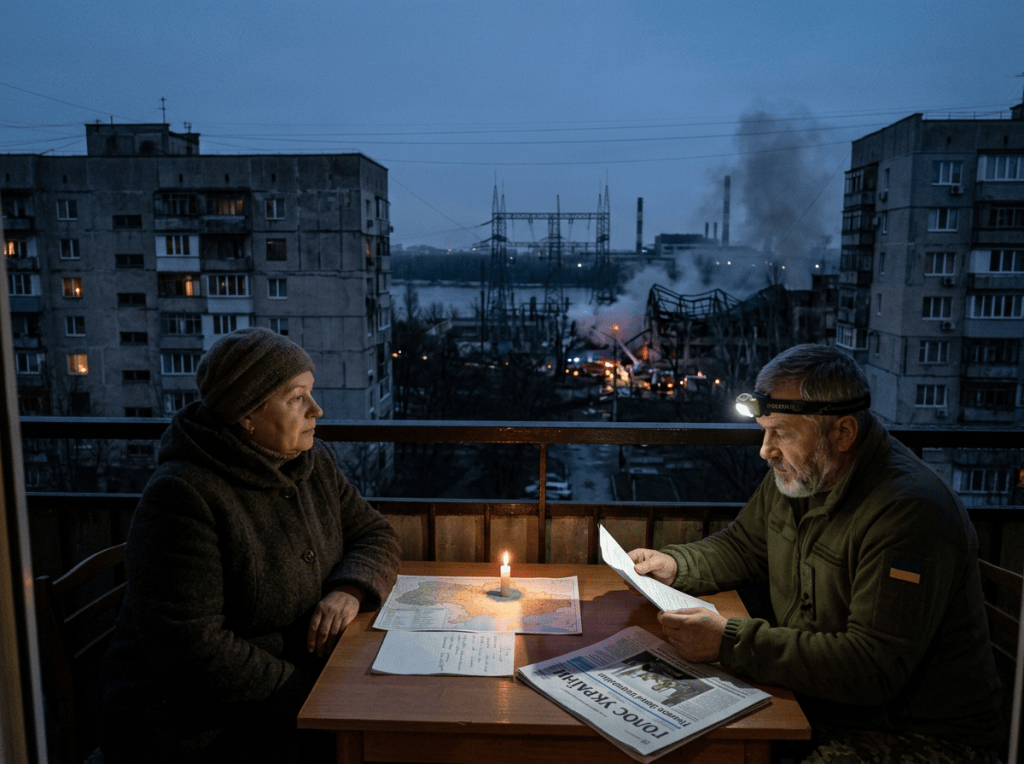
November 6, 2026, was marked by mounting pressure on Ukraine’s energy system, continued fighting along the front line, and preparations for a new diplomatic effort to end Russia’s war. The day also brought several important developments in domestic policy, international assistance, military technology and the humanitarian response to the invasion, informed Foreign Ukraine.
Russia intensified its attacks on Ukraine’s energy infrastructure, the death toll from a strike on a humanitarian aid center in Zaporizhzhia region rose to 53, and Kyiv prepared for another round of trilateral negotiations with the United States and Russia. Meanwhile, Norway pledged additional budget support, Ukraine expanded its use of ground robots on the battlefield, and the government introduced new procedures to identify fallen soldiers and civilians.
Russian attacks kill dozens at humanitarian aid center
One of the most devastating developments was the rising death toll from a Russian air strike on the village of Komyshuvakha in Zaporizhzhia region.
Russian forces attacked the village on November 2, hitting a former school building where local residents had gathered to receive humanitarian assistance. According to Ukrainian officials, Russian aircraft subsequently struck a shelter where civilians and rescue workers had taken cover.
By November 6, the death toll had reached 53, as search and rescue operations entered their fifth day. The acting head of the regional military administration, Mykhailo Semikin, said that rescuers were still working at the site. The final number of victims had not yet been established.
The attack underlined the continuing danger faced by civilians in settlements close to the front line, including people gathering at humanitarian distribution points.
Russia also launched another large-scale drone attack overnight. According to Ukraine’s Air Force, Russian forces deployed 227 attack drones, including jet-powered Shahed-type drones. Ukrainian air defences intercepted or suppressed 196 of them, while impacts were recorded at 14 locations.
The General Staff of Ukraine reported 180 combat engagements along the front line during the day. Russian forces continued their offensive operations, with particularly intense fighting on the Pokrovsk and Kostiantynivka axes.
Kyiv faces severe power and water outages
Ukraine’s energy crisis remained one of the country’s most pressing domestic issues.
President Volodymyr Zelenskyy described the situation in Kyiv as the most difficult among Ukrainian regions. Residents and businesses were facing prolonged electricity and water outages following Russian attacks on energy infrastructure.
The president also criticised the city administration, saying that some decisions intended to prepare the capital for the heating season had not been implemented.
Kyiv Mayor Vitali Klitschko rejected the accusations. He said the city had been preparing for winter since the spring and argued that the central government had delayed approval of Kyiv’s resilience plan. The dispute has developed against the background of continuing Russian attacks and longstanding political tensions between the two leaders.
The disagreement matters because Kyiv, a city of more than three million people, is entering another winter under the threat of attacks on its energy infrastructure. Prolonged outages affect heating, water supplies, public transport and the daily operation of businesses and essential services.
The situation also illustrates the challenges Ukraine faces in protecting critical infrastructure while dealing with shortages of air-defence systems and the need to repair damaged facilities.
Ukraine prepares for another round of peace talks
Diplomatic preparations intensified ahead of a new round of trilateral negotiations involving Ukraine, the United States and Russia, scheduled for November 10–11 in Abu Dhabi.
Ukrainian Foreign Minister Andrii Sybiha said Kyiv was approaching the meeting seriously and expected Moscow to demonstrate the same commitment. He identified several priorities: security guarantees for Ukraine, an energy ceasefire, de-escalation in the Black Sea, the return of Ukrainian children taken to Russia or occupied territories, and exchanges of prisoners of war.
Ukraine has also proposed discussing a halt to hostilities along the current line of contact, without territorial concessions to Russia.
There was some confusion over the composition and leadership of the Ukrainian delegation. Presidential Office head Kyrylo Budanov told CBS News that he would lead the Ukrainian team. However, David Arakhamia, head of the parliamentary faction of Zelenskyy’s Servant of the People party, subsequently told The Kyiv Independent that Rustem Umerov remained the head of negotiations.
Budanov said he did not expect a major breakthrough but considered the agreement to hold face-to-face talks itself a positive development.
The planned meeting is part of renewed US-mediated diplomatic efforts. However, the central disagreements over territory, security guarantees and the future of Ukraine remain unresolved.
Norway pledges $53 million to support Ukraine’s public services
Norway announced an additional 500 million Norwegian kroner — approximately $53 million — in financial assistance to Ukraine.
The funding will be channelled through the World Bank and allocated to the Ukrainian state budget. It is intended to help maintain essential public services and finance salaries, pensions and social benefits in the civilian sector at the beginning of 2027.
The announcement was made during a meeting between Norwegian Foreign Minister Espen Barth Eide and his Ukrainian counterpart, Andrii Sybiha, in Warsaw.
Norway said the assistance would help ensure that schools, hospitals and other public institutions could continue operating despite the economic pressure caused by Russia’s war.
The funding is particularly important as Ukraine faces rising military expenditure, damage to infrastructure and reduced economic activity in areas affected by Russian attacks.
Ukraine expands the use of ground robots on the battlefield
Ukraine’s Ministry of Defence reported a record number of missions carried out by unmanned ground vehicles in October.
According to the ministry, Ukrainian Defence Forces completed 31,398 logistics and evacuation missions using ground robotic systems during the month. This was more than four times the 7,511 missions recorded in January 2026.
Ground robots are increasingly being used to deliver ammunition, food and water to front-line positions and evacuate wounded soldiers from dangerous areas. Their use reduces the need to expose personnel and conventional vehicles to Russian drone attacks.
The ministry said that the missions were recorded in Ukraine’s DELTA battlefield management system and verified by specialists from the Brave1 defence technology initiative.
The figures demonstrate how unmanned ground vehicles are becoming an increasingly important part of Ukraine’s military logistics, particularly in areas where the threat from first-person-view drones makes traditional transport extremely dangerous.
Ukraine introduces new rules to identify fallen soldiers and civilians
The Ukrainian government approved a unified procedure for identifying the bodies and remains of fallen military personnel and civilians.
The new rules establish common standards for regional interagency teams responsible for examining bodies, conducting forensic investigations, collecting biological samples and documenting identification evidence.
A unified coding system will also be introduced to reduce the risk of losing information during the identification process.
Prime Minister Serhii Koretskyi said the changes were intended to reduce delays, improve the quality of forensic examinations and help families receive reliable information about the fate of missing relatives more quickly.
The draft 2027 state budget provides more than UAH 600 million (approximately $13 million) to strengthen forensic medical services, including the purchase of equipment for regional laboratories.
The issue is particularly significant for Ukraine, where the large number of military and civilian casualties, missing persons and repatriated remains has created an enormous identification challenge.
Anti-corruption investigation reaches former senior security official
Another important domestic development concerned the investigation known as Operation Carthage.
On November 6, Ukraine’s High Anti-Corruption Court ordered the detention of Serhii Duka, a former first deputy head of the Security Service of Ukraine’s Department for the Protection of National Statehood. The court set bail at UAH 65 million.
The investigation by Ukraine’s National Anti-Corruption Bureau and Specialised Anti-Corruption Prosecutor’s Office concerns an alleged criminal organisation accused of receiving illicit payments from businesses in exchange for protection from law enforcement.
According to investigators, the alleged scheme involved senior officials in law enforcement and security structures and was intended to protect illegal business operations, including fraudulent call centres.
Duka has denied obstructing the investigation and said he was ready to cooperate with investigators and defend his innocence.
The case is part of broader efforts by Ukraine’s anti-corruption institutions to investigate alleged abuses involving senior officials. The allegations remain subject to judicial proceedings, and the suspects are presumed innocent unless proven guilty.
Ukraine brings 13 children back from Russian-occupied territories
Ukraine also announced the return of 13 children and teenagers from Russian-occupied territories.
The operation was carried out by the humanitarian organisation Save Ukraine with support from the Bring Kids Back UA initiative.
According to the organisation, some of the children had been subjected to psychological pressure and forced to attend schools operating under Russian occupation authorities.
One of the rescued teenagers, an 18-year-old boy with serious health problems, reportedly received a Russian military call-up notice shortly after reaching adulthood. Another child was threatened with the possibility of losing parental custody if his family refused to send him to a Russian-run school.
The children are receiving psychological assistance, help with documents and support with reintegration into life in Ukrainian-controlled territory.
The cases highlight the continuing humanitarian consequences of Russia’s occupation, including pressure on Ukrainian families, the imposition of Russian education and the risk of young people being drawn into Russia’s military system.
Ukraine’s economy faces weaker growth and higher inflation
The National Bank of Ukraine published its updated October Inflation Report, revising its economic outlook in light of intensified Russian attacks and rising energy costs.
The central bank now expects inflation to reach 12.5% by the end of 2026, compared with its previous forecast of 10%.
It also projects that Ukraine’s real gross domestic product will contract by 0.4% in 2026. The economy is expected to return to modest growth in 2027, with GDP forecast to increase by 0.4%, followed by growth of 2.2% in 2028.
The National Bank cited higher fuel prices, damage to production and logistics infrastructure, and the consequences of Russian attacks on energy facilities as major factors affecting the outlook.
The forecast also depends on continued international financial assistance and a gradual improvement in security conditions.
Ukraine continues to face pressure on several fronts
The developments of November 6 illustrate the multiple challenges Ukraine is confronting simultaneously.
Russian attacks continue to threaten civilians and critical infrastructure, while the energy crisis is placing additional pressure on cities and public services ahead of winter. At the same time, Kyiv is preparing for another round of negotiations with Moscow and Washington, seeking security guarantees and practical steps towards de-escalation without surrendering Ukrainian territory.
International financial assistance remains essential for maintaining the functioning of the state, while the growing use of ground robotic systems demonstrates how Ukraine is adapting its military operations to the changing realities of modern warfare.
The country is therefore entering another critical period in which battlefield developments, energy security, international support and diplomatic negotiations will all shape its ability to withstand Russia’s ongoing invasion.
This article is based on information published on November 6, 2026, by Ukrainian government institutions, the National Bank of Ukraine, Reuters, CBS News, The Kyiv Independent, and other media outlets. Statements by Ukrainian officials and preliminary investigative allegations are attributed to their respective sources. Figures and forecasts reflect information available on the publication date.

